🔑 Key Learning
- Nappy rash is a form of irritant contact dermatitis caused by prolonged contact with urine and faeces, leading to skin maceration and irritation
- Characteristically spares skin folds, unlike candida which often involves them
- Candida albicans and bacterial superinfection (e.g. Staph aureus) are common complications
- Management involves barrier creams, mild topical steroids, and antifungal or antibiotics if required.
🧬 Pathophysiology
- Irritant contact dermatitis due to:
- Prolonged exposure to urine/faeces
- Skin maceration from overhydration
- Friction from nappies
- Secondary infection:
- Candida albicans
- Staphylococcus aureus or Streptococci
👀 Clinical Features
- Well-defined erythema, oedema, and dryness of:
- Buttocks
- Proximal thighs
- Suprapubic region
- Typically spares skin folds (e.g. inguinal and subgluteal creases)
- Candida features:
- Bright red patches
- Papules or pustules
- Satellite lesions
- Scaling
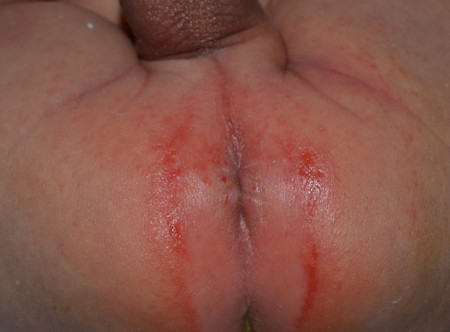 Figure 7: Nappy rash. Dailyboth, Irritant diaper dermatitis, CC0 1.0.
💊 Management
- Conservative: High absorbency nappies, frequent nappy changes, regular skin cleaning
- Mild rash, asymptomatic:
- Barrier cream (e.g. zinc oxide) at each change
- Inflamed or symptomatic:
- Topical hydrocortisone 1% OD for 7 days
- Suspected/confirmed candida:
- Add topical imidazole cream (e.g. clotrimazole)
- Bacterial infection:
📝 Exam Clues & Clinchers
- “Well-defined erythema sparing skin folds in infant” → classic irritant nappy rash
- “Satellite pustules, red plaques, involves skin folds” → think Candida
- Treatment: 1st line: Barrier cream + mild steroid +/- antifungal/abx



